

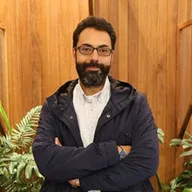
Carlos Miguel Gomez
University of Rosario
Collaborating Network
Affiliations
Associate Professor, School of Human Sciences, University of Rosario, Bogota, Colombia
Biography
Profesor Asociado. Obtuvo un Doctorado en Filosofía de la Religión de la Univerisdad Goethe de Frankfurt y una Maestría en Estudios de las Religiones de la Univerisdad de Lancaster, Reino Unido. Es Licenciado en Filosofía y Profesional en Estudios Literarios de la Univeridad Javeriana de Bogotá. Sus áreas de trabajo son la Filosofía de la religión, la Filosofía intercultural y la Hermenéutica. Ha sido profesor visitante del Departamento de Estudios de las Religiones de la Universidad de Cork, Irlanda (2018) y Fellow del proyecto Bridging the Two Cultures of Science and the Humanities, Scholarship and Christianity in Oxford (2015-2016).
Es director del Centro de Estudios Teológicos y de las Religiones de la Universidad del Rosario y del grupo de investigación con el mismo nombre, que congrega a investigadores de las Universidades Rosario, Nacional y Javeriana, el cual ha recibido financiación del Ian Ramsey Centre for Science and Religion de la Universidad de Oxford. Entre sus publicaciones se destaca el libro: Interculturality, Rationality and Dialogue: In Search for Intercultural Communicative Criteria for Latin America (Würzburg: Echter Verlag, 2012); y como co-editor: Ciencia y Creación. La investigación científica de la naturaleza y la visión cristiana de la realidad (Madrid, Bogotá: Sal Terrae, Comillas y Javeriana, 2018); ¿Ciencia o Religión? Exploraciones sobre las relaciones entre religión y racionalidad en el mundo contemporáneo (Bogotá: Universidad Javeriana, Universidad del Rosario, 2017); Filosofía y Misticismo (Bogotá: Universidad del Rosario, Sociedad Colombiana de Filosofía, 2015); La religión en la sociedad postsecular: Transformación y relocalización de lo religioso en la modernidad tardía (Bogotá: Universidad del Rosario, 2014).
Ha publicado diversos artículos sobre diálogo intercultural, post-secularización, ciencia y religión, epistemología de la religión y hermenéutica en revistas como Scientia et Fides, Principia: an International Journal of Epistemology, Ideas y Valores y Theologica Xaveriana.
Research Focus
Epistemology of religion: Is religious experience a valid form of knowledge?
How does it relate to other forms of knowledge? Are there different forms of rationality? How do faith and rationality relate? What account of rationality can better allow for dialogue and mutual enrichment between secular and religious truth claims? Is there a way of evaluating religious truth claims in postsecular societies?
Intercultural and Interreligious Dialogue: How can we account for the fact of different (and sometimes apparently incompatible) forms of religious experience?
What are the hermeneutic criteria for understanding and entering into dialogue with people from other religious and spiritual traditions? What normative conditions should guide intercultural dialogue? How can it help to construct truly pluralistic societies?
Philosophy as a Spiritual Practice: How can we recover the sense of and search for wisdom both within and beyond the academia, where certain technical conceptions of knowledge have become dominant? How can philosophy be reshaped to rediscover its vocation to direct life to fulfilment and goodness? How can spiritual techniques be integrated into the methods of philosophical inquiry? How does poetic thinking (based on images and rhythm) and literary writing overcome the limitations of conceptual and discursive thinking, particularly regarding its ability to express and discover the meaning of transcendental experiences (which are commonly said to overflow language and concepts)?
GFI Writings

Carlos Miguel Gomez
University of Rosario
Knowing in Love
One of the central theses of Professor O’Donovan’s Theology Brief titled The Sovereignty of Love is that there is a strong and intimate connection between love and knowledge. This idea, which has a long history in Western thought, implies different interrelated affirmations: Firstly, there is a kind…
Carlos Miguel Gomez
University of Rosario
Love as a Way of Knowing the World Opposes a Dominant View of Knowledge
In his Preview on The Sovereignty of Love, Professor O’Donovan delineates an argument in favour of the long-standing claim that love is a way of knowing the world. This claim opposes a dominant view of knowledge, particularly strong since the scientific revolution, according to which the only valid …
Carlos Miguel Gomez
University of Rosario
Suffering and the Gift of Flourishing in Colombia
Flourishing in suffering I read the Theology brief on human flourishing after visiting a family of indigenous healers in my country, Colombia – a family that has become my own. The Taita’s (shaman) grandchildren, 7 and 4 years old, were mourning the absence of their mother, who had to go away for a …
Carlos Miguel Gomez
University of Rosario
Epistemic Injustice
Wolterstorff’s aim of bringing to light and demanding attention to the role of justice in the academy should represent a fundamental commitment for all of us. This requires a constant effort to identify and fight against subtle forms of injustice, hidden behind academic practices or institutionalize…